
















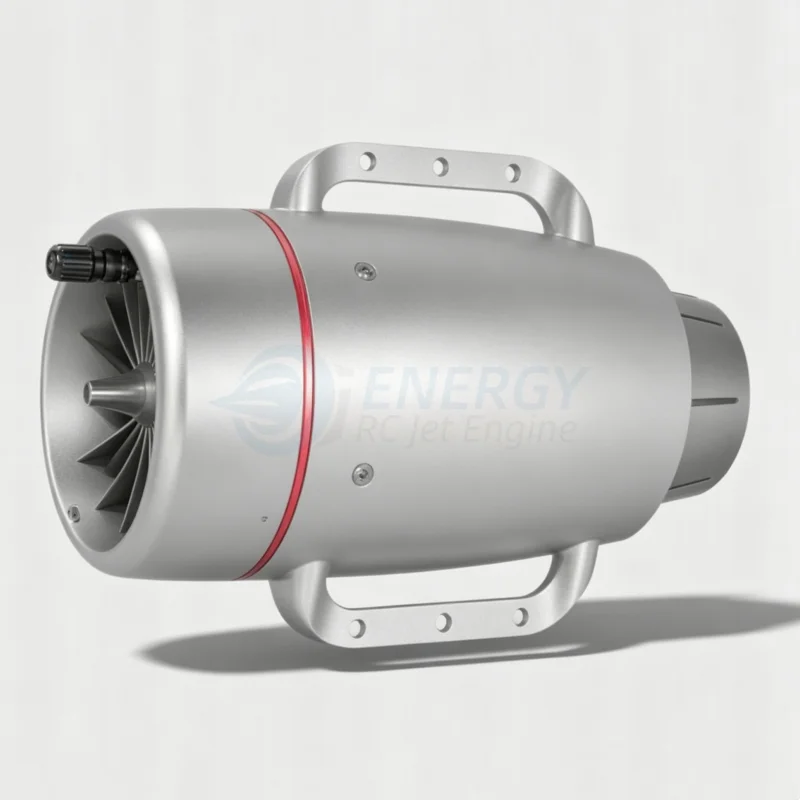
The Engineering Architecture of Micro-Turbines: A Technical Review of the EN-P10PRO Propulsion System
In the sectors of unmanned aerial vehicles (UAVs), tactical scale aeromodelling, and experimental aerospace engineering, the selection of a propulsion system represents a critical compromise between mass, thermal efficiency, and thrust density. While Electric Ducted Fan (EDF) technologies have advanced, their energy density remains bottlenecked by modern lithium-polymer battery chemistry. Conversely, reciprocating piston engines, while fuel-efficient, fail to provide the high exhaust velocities and power-to-weight ratios required for high-speed, high-altitude aerodynamic validation.
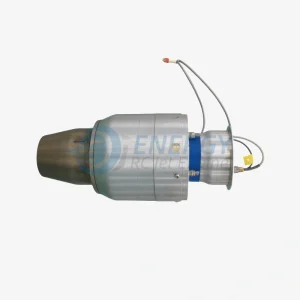
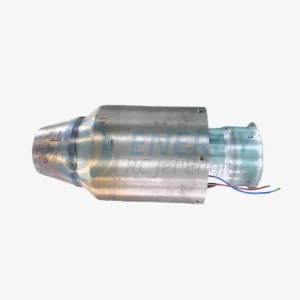
The EN-P10PRO Micro Turbojet Engine by Energy RcJetEngine represents a significant benchmark in civil-grade gas turbine miniaturization. Designed around a 10kgf (kilogram-force) nominal framework, this system integrates advanced metallurgy, automated digital control, and high-altitude thermodynamic stabilization. This technical review evaluates the design, mechanical composition, operational envelope, and industrial utility of the EN-P10PRO platform.
1. Thermodynamic Profile and Thrust Dynamics
The core architecture of the EN-P10PRO operates on an open Brayton cycle, scaled down to a footprint optimized for constrained fuselages. The engine achieves its efficiency through high rotational velocity and optimized mass airflow management.
Thrust Stratification Under ECU Regulation
Rather than delivering a static output, the EN-P10PRO features a multi-tiered thrust envelope governed by an intelligent Electronic Control Unit (ECU):
Linear Throttle Response and Idle Behavior
A persistent challenge in micro-turbine design is rotor lag—the delay between the operator’s input and the actual acceleration of the gas column. The EN-P10PRO addresses this via a finely calibrated inertia-to-power ratio. From a stable idle speed of 46,000 RPM (generating a negligible residual thrust of 0.5 kgf), the core shaft can spool up to its maximum operational limit of 150,000 RPM within a highly linear acceleration curve. This predictability is critical for autonomous flight controllers (such as Pixhawk or Ardupilot platforms) that require tight feedback loops for attitude control.
2. Comprehensive Technical Specifications Matrix
For integration into research airframes or industrial UAV hulls, precise physical and performance parameters are mandatory. The data below reflects the exact engineering specifications of the system:
| Core Parameter | Metric Value | Operational & Aerodynamic Significance |
|---|---|---|
| Nominal Rated Thrust | 10 kgf | Continuous baseline for range and endurance calculations |
| Peak / Burst Thrust Range | 10.5 – 11 kgf | Transient reserve for critical flight envelopes |
| Maximum Rotor Velocity | 150,000 rpm | Critical limit for structural integrity and blade tip Mach speed |
| “>Idle Velocity / Residual Thrust | 46,000 rpm / 0.5 kgf | Low-consumption standby mode with optimized throttle readiness |
| Exhaust Gas Temperature (EGT) | 695 °C | Thermodynamic equilibrium point to maximize turbine life |
| Volumetric Fuel Consumption | 320 ml/min | Metric for calculating specific fuel consumption (SFC) and fuel fraction |
| Net Dry Mass | 997 g | Sub-1kg baseline enabling superior power-to-weight efficiency |
| Enclosing Dimensions | 91 mm x 176 mm | Aspect ratio designed for low-drag, high-fineness-ratio fuselages |
| Maximum Operational Ceiling | 8,000 meters | Performance capability within lower-density atmospheric strata |
| Scheduled Maintenance Interval | 25 Hours | Rotor balance, bearing inspection, and ultrasonic NDT threshold |
| Fuel Compatibility Matrix | Jet A-1 / Premium Kerosene | Standard global civil aviation fuels with approved lubricants |
3. Aerospace Metallurgy and Mechanical Sub-Systems
The ability of a sub-1kg engine to withstand 150,000 RPM while channeling a continuous 695 degree Celsius gas flow requires industrial-grade materials. The EN-P10PRO utilizes specific alloys chosen for their unique thermal and mechanical properties.
Multi-Axis CNC Aluminum Compressor Stage
The ambient air enters through an aerodynamically optimized intake bellmouth before being compressed by a radial compressor wheel. Machined from high-tensile aluminum alloy via multi-axis CNC milling, the compressor profile ensures maximum pressure ratio rise while mitigating aerodynamic stall or surge conditions at high angles of attack.
Annular High-Temperature Stainless Steel Combustion Chamber
The compressed air enters a reverse-flow annular combustion chamber. Constructed from high-temperature resistant stainless steel, the chamber layout optimizes the fuel-air equivalence ratio. By utilizing advanced micro-perforation vaporization tubes, the fuel is thoroughly atomized.
Nickel-Based Superalloy Turbine Wheel
The single-stage axial turbine wheel absorbs the kinetic energy of the expanding gas to drive the compressor. Operating under extreme centrifugal load and high temperature, this component is cast from a proprietary nickel-based superalloy. This material is specifically chosen for its exceptional resistance to thermal fatigue and creep deformation.
4. Intelligent Digital Control and Safety Protocols
Modern flight systems cannot afford manual oversight of critical turbine metrics. The integrated digital Electronic Control Unit (ECU) of the EN-P10PRO acts as a comprehensive, real-time safety network.
Full-Autostart Sequencing
The engine features a single-command autostart sequence. Upon receiving the start signal, the ECU manages the starter motor RPM, activates the internal ignition system, and progressively ramps up fuel delivery based on real-time Exhaust Gas Temperature (EGT) feedback. This completely eliminates the risk of “hot starts” or hung starts that typically plague manual or less advanced turbine systems.
Closed-Loop Protective Systems
- Overtemperature Mitigation: If the EGT exceeds the designated 695 degree Celsius thermal boundary due to restricted airflow or fuel spikes, the ECU instantly throttles back fuel delivery within milliseconds to preserve the turbine wheel.
- Overspeed Prevention: The RPM is tracked continuously via a magnetic induction sensor. Any deviation past 150,000 RPM triggers an immediate corrective reduction in pump voltage.
- High-Altitude Restart and Flameout Recovery: In the event of a flameout induced by severe atmospheric turbulence or temporary fuel starvation, the ECU initiates an automated in-flight restart sequence.
5. Industrial and Research Applications
The EN-P10PRO is designed as a multi-role propulsion unit, fulfilling specific operational requirements across several key civil sectors.
Unmanned Aerial Systems (UAS) and Target Drones
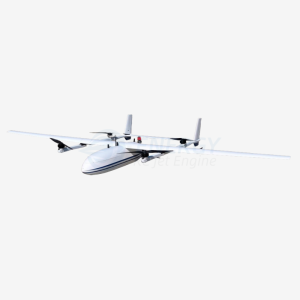
For long-endurance or high-speed civil UAV operations—such as remote geological mapping, pipeline inspection, or border surveillance—battery-operated systems face severe range limitations. The EN-P10PRO provides high energy-density liquid fuel compatibility, allowing platforms to significantly extend their loiter time, increase cruising speeds, and maintain stable operations in heavy headwinds.
Institutional Academic Research and Aerospace Education
Universities and aerospace labs utilize the EN-P10PRO as a sub-scale testing platform for gas turbine dynamics, blade row aerodynamics, and emission profiling. Its fully digital telemetry output allows students and researchers to easily extract real-time operational data for analysis in MATLAB, LabVIEW, or proprietary flight data software.
6. Integration, Installation, and Lifecycle Management
To ensure optimal structural integrity and longevity of the EN-P10PRO platform, strict engineering guidelines must be implemented during integration:
- Fuel Filtration Protocols: The system must only be operated on high-grade Jet A-1 or premium kerosene, pre-blended with a high-performance turbine oil at a specified ratio (typically 3% to 5%). A multi-stage inline fuel filter must be installed between the fuel tank and the micro-pump to prevent microscopic particulate matter from clogging the internal fuel injectors.
- Thermal Isolation and Bypass Ventilation: While the engine structure isolates much of the exhaust heat, the engine bay must feature positive ventilation. Air bypass routing should be designed to constantly sweep the engine casing, preventing radiant heat soak into carbon fiber or composite airframes after engine shutdown.
- Mechanical Alignment and Isolation: The engine must be clamped securely via its factory-specified rigid mounting bracket. Alignment with the thrust tube must be precise to avoid asymmetric thrust vectors or localized heat accumulation on the airframe tail cone.
7. B2B Solutions: OEM Supply and Integration Partnerships
Energy RcJetEngine supports commercial scaling, institutional procurement, and global distribution via structured enterprise channels:
- OEM/ODM System Tailoring: Engineering adjustments can be made to exhaust configurations, structural mounting rings, or specialized ECU firmware profiles to meet the precise requirements of proprietary UAV designs or specific laboratory test beds.
- Industrial Fleet Solutions: Comprehensive wholesale supply structures are available for commercial drone manufacturers and enterprise flight schools requiring ongoing fleet integration.
8. Civil Compliance Statement
The EN-P10PRO Micro Turbojet Engine is developed, manufactured, and distributed strictly for civil, educational, commercial UAV, and recreational aeromodelling applications. Energy RcJetEngine enforces a strict compliance policy ensuring that all international shipping, documentation, and operational consulting align with global civil aviation guidelines and non-military dual-use export regulations.

Reviews
There are no reviews yet.