


Introduction
As unmanned aerial vehicles (UAVs), target drones, and experimental flight platforms continue to expand in capability and scale, small turbojet engines remain a preferred propulsion solution for applications that demand compact size, high thrust density, and consistent performance.
For procurement managers and technical decision-makers, purchasing a small turbojet engine in 2026 involves more than simply selecting a thrust rating. Engine specifications, application suitability, supplier reliability, and sourcing model all directly affect project cost, delivery timelines, and long-term operational success.
This guide provides a practical, procurement-oriented overview to help buyers make informed and low-risk decisions when sourcing small turbojet engines.
Understanding Small Turbojet Engines
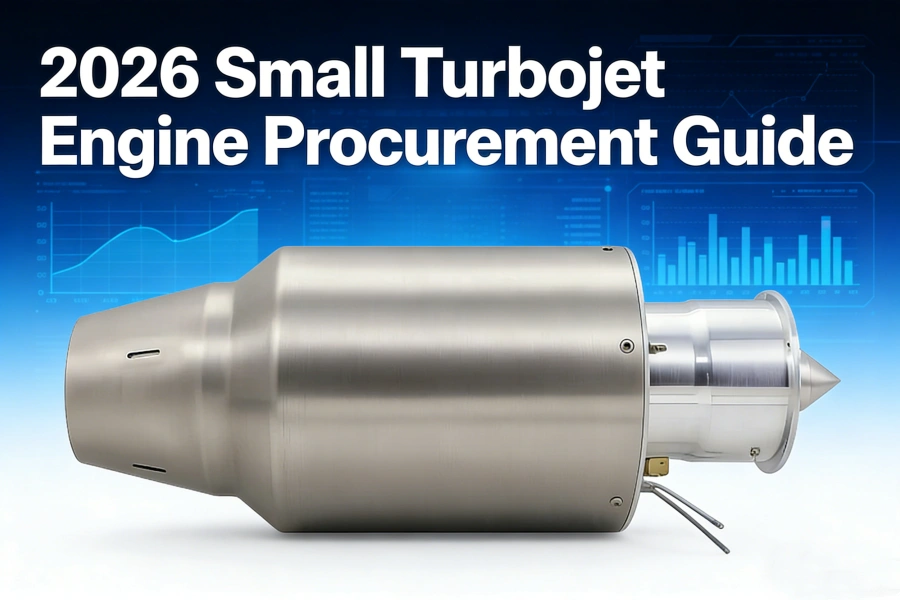
A small turbojet engine is a compact gas turbine propulsion system typically producing 20 to 150 kgf of thrust. These engines are widely used in:
-
Fixed-wing UAVs and target drones
-
Research and development platforms
-
Flight testing and propulsion validation programs
-
Academic and institutional aerospace projects
Compared with piston engines or electric propulsion systems, turbojet engines offer:
-
High thrust-to-weight ratios
-
Simple mechanical architecture
-
Stable performance at high speed and altitude
These characteristics make them especially suitable for professional and experimental aerospace applications.
Key Specifications That Matter in Procurement
Before requesting quotations or finalizing supplier selection, procurement teams should evaluate the following technical parameters carefully.
Thrust Rating
Thrust is the primary performance indicator of a turbojet engine and is usually expressed in kilogram-force (kgf) or Newtons (N).
Common thrust classifications include:
-
20–40 kgf: Lightweight UAVs, educational platforms, early-stage testing
-
40–80 kgf: Medium UAVs, research platforms, general-purpose use
-
80–120 kgf: Advanced R&D systems and heavier payloads
-
Above 120 kgf: Specialized or high-performance applications
Procurement insight:
Selecting excessive thrust increases fuel consumption and cost, while insufficient thrust may compromise reliability and flight safety. Mission requirements should always define thrust selection.
Engine Weight and Dimensions
Engine weight and physical dimensions have a direct impact on:
-
Airframe structural design
-
Payload capacity
-
Installation and integration complexity
Buyers should confirm:
-
Dry weight versus operational weight
-
Overall length and diameter
-
Mounting interface compatibility with the airframe
A higher thrust-to-weight ratio typically indicates better system efficiency and integration flexibility.
Fuel Type and Fuel Consumption
Most small turbojet engines operate on Jet A, Jet A-1, or aviation kerosene.
Key considerations include:
-
Specific fuel consumption under nominal thrust
-
Fuel pump and injector configuration
-
Stability under high-temperature or high-altitude conditions
Requesting verified test data and fuel consumption curves helps reduce performance uncertainty during deployment.
Thrust Class Selection and Application Comparison
| Plage de poussée | Applications typiques | Key Characteristics |
|---|---|---|
| 20–40 kgf | Light UAVs, education | Compact, cost-efficient |
| 40–80 kgf | UAVs, research, testing | Versatile and widely adopted |
| 80–120 kgf | R&D platforms | Higher payload capability |
| 120+ kgf | Specialized missions | Maximum power output |
Market observation:
Le 40–80 kgf range remains the most commonly procured category due to its balance between performance, size, and cost.
Factory-Direct Supply vs Distributor Procurement
Choosing the right sourcing model is a critical procurement decision that affects pricing, customization, and long-term support.
Factory-Direct Supply
Advantages
-
More competitive pricing by eliminating intermediaries
-
Customization options for mounts, control systems, and accessories
-
Direct communication with engineering and production teams
-
Better suitability for batch orders and long-term projects
Considerations
-
Production-based lead times
-
Possible minimum order quantity requirements
Distributor or Agent Procurement
Advantages
-
Faster delivery for in-stock models
-
Lower initial procurement barriers
-
Suitable for trial orders or urgent needs
Considerations
-
Higher unit pricing
-
Limited customization options
-
Reduced control over manufacturing details
Read More:EN-P50 50 kgf RC Turbine Jet Engine-Professional Mini Turbine Power for RC Aircraft
Sourcing Comparison Summary
| Procurement Priority | Recommended Sourcing |
|---|---|
| Cost optimization | Factory-direct |
| Custom specifications | Factory-direct |
| Short delivery time | Distributor |
| Small trial orders | Distributor |
| Long-term supply | Factory-direct |
Evaluating Turbojet Engine Suppliers
A reliable supplier should demonstrate capability beyond competitive pricing.
Technical Capability
-
Documented performance testing and validation
-
Quality control and inspection procedures
-
Experience across multiple applications
After-Sales Support
-
Clear warranty and service policies
-
Disponibilité des pièces détachées
-
Technical documentation and support response
Manufacturing and Delivery Reliability
-
Stable production capacity
-
Transparent lead-time commitments
-
Consistent quality across batches
Strong supplier evaluation reduces total lifecycle risk and improves long-term operational stability.
Risk Management Best Practices
To minimize procurement risk in 2026, buyers should consider the following strategies:
-
Prototype evaluation before bulk orders
Conduct real-world testing to validate performance and integration. -
Clear acceptance criteria
Define thrust tolerance, fuel consumption limits, and inspection standards in contracts. -
Early logistics planning
International shipping, export documentation, and customs clearance should be incorporated into project timelines.
Conclusion
Successful small turbojet engine procurement in 2026 requires a balanced evaluation of technical performance, application suitability, supplier capability, and sourcing strategy.
By understanding key specifications, selecting the correct thrust class, and working with reliable factory-direct suppliers, procurement teams can achieve improved performance, controlled costs, and reduced operational risk across their projects.
For buyers seeking consistent quality and long-term supply stability, a structured and informed procurement approach is the foundation of successful turbojet engine integration.