
















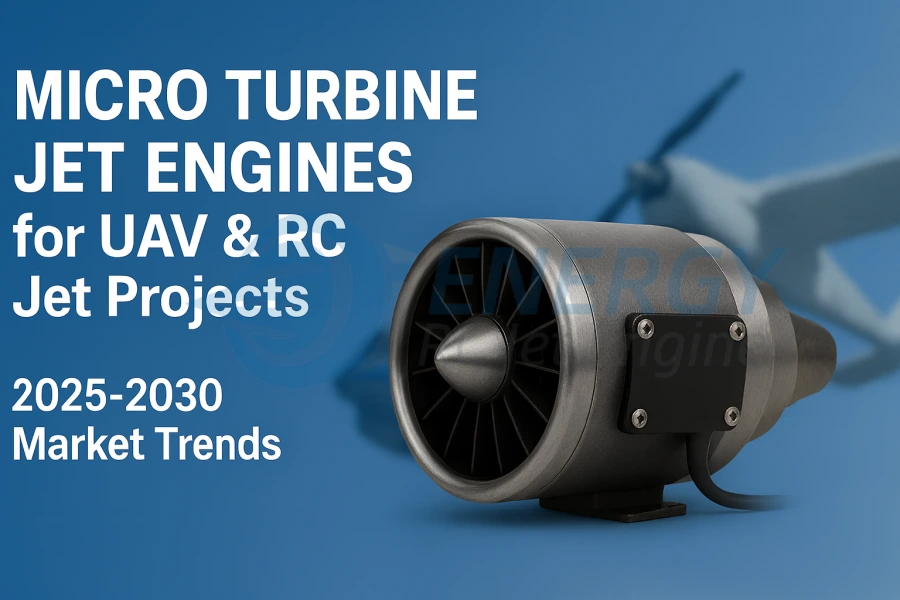
Micro turbine jet engines are rapidly becoming one of the most exciting propulsion technologies in the UAV, RC aviation, and research sectors. With compact size, high thrust-to-weight ratios, and impressive reliability, they have moved far beyond the hobby market and are now widely used by UAV manufacturers, R&D institutions, aerospace startups, and professional RC jet builders.
From 2025 to 2030, the global demand for 40–150 kgf class micro turbine engines is projected to grow at a strong rate. As new applications continue to emerge—ranging from high-speed UAV platforms to experimental airframes and advanced technical education—the importance of choosing the right turbine engine supplier has never been greater.
This article provides a complete guide for B2B buyers, engineering teams, OEM partners, and distributors who are planning to integrate micro turbine engines into their projects.
1. Why Micro Turbine Jet Engines Are Entering a High-Growth Period
The micro turbine market is experiencing strong momentum, driven by several key factors:
1.1 Rising global UAV development
Commercial and industrial UAV platforms increasingly require higher thrust, longer endurance, and better payload capacity. Micro turbines provide strong power output in a compact configuration, making them ideal for:
High-speed fixed-wing UAVs
Target drones and experimental aircraft
Long-range R&D test platforms
Jet-assisted takeoff (JATO) UAV systems
1.2 Growth of large-scale RC jet aviation
RC super-jets, scale model projects, and competition aircraft are more popular than ever. Professional builders now look for engines in the 40–150 kgf range with:
Stable ECU
Smooth throttle response
Strong durability
Global serviceability
1.3 Research & engineering education demands
Universities, aerospace labs, and engineering institutes increasingly incorporate micro turbine engines into:
Propulsion research
CFD & flight dynamics testing
Experimental aircraft programs
Engine performance labs
Student design competitions
1.4 Supply chain maturity in China
As manufacturing capabilities grow, high-quality micro turbine engines have become more accessible. Suppliers offering OEM/ODM customization and batch delivery are now deeply integrated into the global B2B UAV ecosystem.
2. Micro Turbine Jet Engine Fundamentals — What B2B Buyers Must Know
Before selecting an engine, it’s helpful to understand the core components that determine performance and reliability.
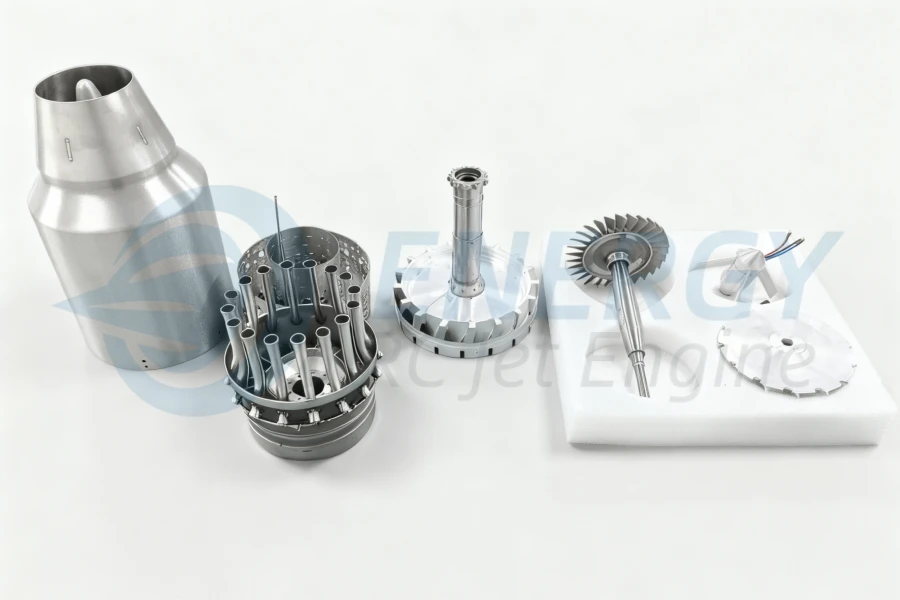
2.1 How a micro turbine engine works
Although much smaller than full-scale jet engines, micro turbines operate on the same principle:
Air intake
Compressor stage (centrifugal or axial)
Combustion chamber
Turbine wheel
High-velocity exhaust producing thrust
This simple yet powerful design enables impressive performance even at compact sizes.
2.2 Key performance parameters
For engineering teams evaluating engines, focus on:
Thrust output: 40 kgf to 150 kgf for UAV & RC jets
Weight: affects aircraft payload and CG placement
Fuel efficiency: directly impacts endurance
ECU system: stability, safety protections, parameter tuning
Throttle response: critical for maneuverability and takeoff
Operating reliability: vibration, heat resistance, rotor balancing
Maintenance & serviceability: access to spare parts, diagnostics
2.3 Why micro turbines outperform other propulsion systems
Compared to electric propulsion, micro turbines offer:
Much higher thrust density
Higher cruise speed
Better endurance for large airframes
Greater payload capacity
Better suitability for long-distance missions
This is why they are increasingly used in industrial UAVs, target drones, and next-gen experimental aircraft.
3. 2025–2030 Market Trends in Micro Turbine Jet Engines
3.1 Strong forecasted market expansion
Market research shows sustained growth for micro turbine engines through 2030, driven by:
Military and commercial UAV R&D
Rapid rise of global RC aviation communities
Increased investment in experimental aerospace programs
Wider availability of high-performance engines with 40–150 kgf thrust
3.2 Growing demand for specialized engines
Manufacturers and institutions increasingly require:
Higher thrust ranges
Customized fuel systems
Advanced ECU monitoring
Improved durability under harsh environments
Tailored mounting solutions
Batch production for commercial UAV programs
This shift from hobby to industrial application significantly increases the expectations for performance and reliability.
3.3 The “OEM era” of micro turbines
The industry is clearly transitioning toward:
OEM-integrated propulsion systems
Engine-airframe compatibility design
Custom electronics and interface configurations
Application-specific performance tuning
This creates opportunities for suppliers who can deliver high-quality engines with customization flexibility.
4. How to Choose the Right Micro Turbine Jet Engine Supplier
Selecting an engine is not only about thrust; it’s about long-term reliability, support, and engineering compatibility.
Below is a checklist for evaluating suppliers (ideal for procurement teams and system engineers).
4.1 Full thrust range availability (40–150 kgf)
A serious supplier should offer a family of engines suitable for:
Medium-size UAVs (40–60 kgf)
Large RC jets (80–120 kgf)
Heavy-lift or high-speed UAVs (120–150+ kgf)
A wide portfolio ensures better matching between engine and aircraft.
4.2 Manufacturing quality & materials
High-quality engines use:
CNC-machined components
Aviation-grade alloys
High-temperature combustion liners
Precision rotor balancing
High-speed ceramic hybrid bearings
These factors directly influence reliability and lifespan.
4.3 ECU stability & control systems
A robust ECU is essential for B2B operational scenarios. Key capabilities include:
Automatic start sequence
Real-time temperature & RPM monitoring
Fuel pump control
Safety shutdown logic
Smooth, predictable throttle mapping
For UAVs, an ECU with digital interface ports is a must.
4.4 Customization (OEM / ODM)
Professional buyers often require:
Custom thrust tuning
Modified mounts
Tailored fuel systems
Communication interfaces
Airframe-specific exhaust geometry
Suppliers who support customization provide a major advantage for engineering teams.
4.5 Documentation, testing, and certification
Reliable suppliers provide:
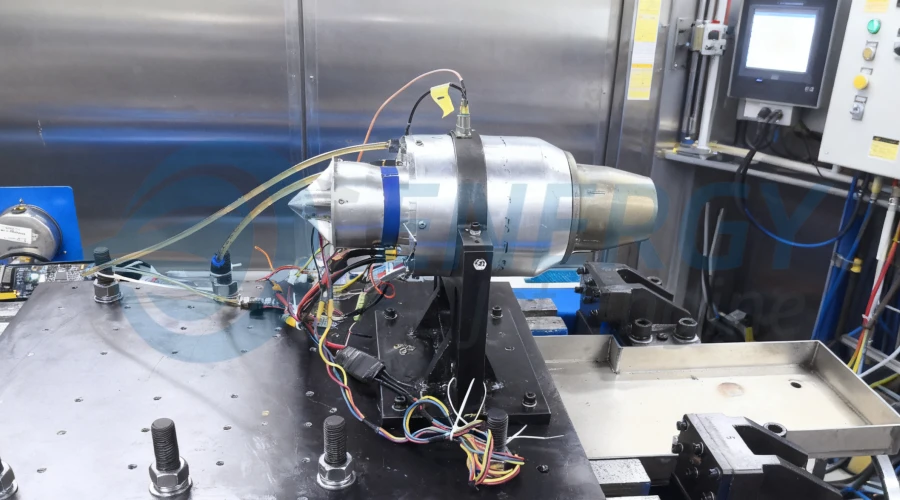
Test reports
Performance curves
Installation manuals
Safety guidelines
Endurance test documentation
Especially important for university labs, industrial UAVs, and aerospace research.
4.6 Global logistics & after-sales service
For B2B buyers, support matters just as much as performance:
Spare parts availability
Response speed
Technical troubleshooting
Warranty terms
Batch delivery capacity
This ensures long-term project stability.
5. Real-World Application Scenarios
Micro turbine jet engines are used in a wide range of professional applications worldwide.
5.1 UAV / Unmanned Aircraft Systems
High-speed UAVs
Experimental test platforms
Target drones
Long-range fixed-wing airframes
VTOL assist systems
5.2 Academic & Research Institutions
Propulsion research & lab testing
Jet engine thermodynamics studies
Student aerospace competitions
Prototype and CFD validation
5.3 Large RC Jet Aircraft
Super-scale RC models
Airshow performance jets
Competition aircraft
Club-level high-performance builds
5.4 OEM / Distributors
Batch purchasing
Branded propulsion packages
Engine integrated into proprietary airframes
Commercialized UAV propulsion systems
With thrust levels between 40–150 kgf, the possibilities are extensive.
6. B2B Procurement Checklist (Quick Summary)
Before purchasing, ensure your supplier provides:
✔ A suitable thrust range (40–150 kgf)
✔ High-quality CNC components and rotor balancing
✔ Strong ECU reliability and digital interface options
✔ OEM/ODM customization capability
✔ Clear testing documentation
✔ Fast global delivery
✔ Warranty & reliable after-sales service
A reliable supplier should function as a long-term engineering partner, not just a vendor.
7. Conclusion — Why Now Is the Best Time to Invest in Micro Turbine Jet Engines
From 2025 to 2030, micro turbine jet engines will play a transformative role in professional UAV development, large-scale RC aviation, research programs, and emerging aerospace concepts.
Organizations that secure dependable engine suppliers—offering customization, technical support, and wide thrust ranges—will gain a competitive advantage in performance, reliability, and operational cost.
Energy RC Jet Engine provides:
Full 40–150 kgf turbine engine series
OEM/ODM customization
Application-specific engineering support
Global B2B delivery and technical cooperation
For quotations, partnerships, or technical consultation, feel free to contact our team.
We look forward to supporting your next-generation UAV, research, or RC jet propulsion project.