
















The EN-P80 Series from Energy RcJetEngine delivers stable 80 kgf thrust with advanced ECU control, high fuel efficiency, and aerospace-grade durability. Engineered for large RC jets, civil UAV platforms, research drones, and experimental aviation models, this turbine series combines precision engineering with reliable long-duration performance. With OEM/ODM customization, private labeling, and factory-direct global supply, the EN-P80 is the ideal propulsion solution for demanding flight applications.
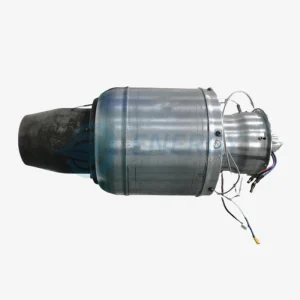
Engineering Architecture, Commercial Value, Global UAV Applications & OEM Integration
Introduction — A New Generation of Civil Mini Turbine Technology
The rapid development of civil aviation models, advanced RC jets, and commercial-grade UAV systems has created an unprecedented demand for high-performance, compact gas turbine engines that deliver both reliability and adaptability. As drone platforms expand into logistics, surveillance, environmental monitoring, and scientific research, propulsion systems have become a bottleneck that determines airframe capability, mission duration, and operational safety.
The EN-P80 mini jet turbine engine—engineered and manufactured by Energy RcJetEngine—is designed to address this gap with a propulsion solution that unites engineering precision, aviation-level material standards, long-duty cycle durability, and smart ECU-driven performance management. Delivering 80 kgf of thrust, this engine stands at the core of a modular turbine series ranging from De 40 kgf a 150 kgf, enabling seamless scalability across light research drones, heavy RC jets, experimental aircraft, and industrial unmanned platforms.
This 5,000-word technical and commercial whitepaper presents a comprehensive analysis of the EN-P80, covering its mechanical structure, thermal dynamics, fuel system logic, digital ECU algorithms, operational characteristics, reliability engineering, and global market applications. It also highlights the business advantages offered by Energy RcJetEngine as an OEM manufacturer, wholesale supplier, and long-term technology partner.
1. Engineering Philosophy Behind the EN-P80
1.1 Design Goals
The EN-P80 was developed to deliver:
Stable 80 kgf thrust output
High thermal and combustion efficiency
Structural durability for extended flight hours
Advanced digital control for civil-grade UAV requirements
Modular maintainability
Compatibility with multiple airframe types
Rather than designing a hobby-grade product purely for recreational RC jets, Energy RcJetEngine built the EN-P80 as a semi-professional unit capable of supporting:
Long-endurance missions
High-altitude testing
Scientific research experiments
Heavy aerodynamic prototypes
Industrial UAV operations
This philosophy ensures the engine performs reliably across extreme ambient temperature ranges, rapid throttle cycles, challenging atmospheric conditions, and multi-hour continuous workloads.
1.2 Manufacturing Process & Quality Control
Precision is at the core of the EN-P80’s creation. Each turbine wheel, shaft, and compressor component undergoes:
5-axis CNC machining
Multi-step dynamic balancing
Ultrasonic inspection
Material heat treatment validation
High-temperature deformation tests
Vibration and resonance testing
Thermal expansion simulation
These steps ensure minimal rotor runout, optimal airflow smoothness, and extended bearing lifespan. The engine is assembled in a controlled environment to prevent micro-contamination in high-speed rotational components.
2. Turbine Core Architecture — Aerodynamics & Energy Conversion
The EN-P80 operates on a single-spool gas turbine architecture integrating:
Centrifugal compressor
Annular combustor
Axial turbine
Accessory gearbox
ECU-controlled fuel system
Brushless electric starter
2.1 Compressor System
The centrifugal compressor is engineered to maintain:
High compression ratio
Low aerodynamic loss
Balanced airflow distribution
Smooth pressure recovery
It is CNC-machined from aerospace aluminum alloy with:
Blade optimization via CFD simulation
Reinforced hub to reduce radial deformation
Surface treatments that improve corrosion resistance
High-flow efficiency across broad rpm ranges
At peak 98,000 rpm, the compressor ensures stable combustion airflow with minimal stall risk.
2.2 Annular Combustion Chamber & Thermal Management
The EN-P80 combustion system incorporates:
Multi-point fuel atomization
360° air-fuel mixing
Staged combustion stabilization
Segmented cooling holes for flame tube protection
Low-soot flow pattern for cleaner exhaust
High-temperature materials enable consistent performance during:
Rapid throttle transitions
Extended maximum thrust operation
High ambient thermal loads
Low-pressure high-altitude flights
Thermal uniformity across the turbine inlet reduces hotspot formation, extending turbine wheel lifespan.
2.3 Turbine Stage & High-Speed Rotational Dynamics
The turbine wheel is constructed from nickel-based superalloy engineered for:
950°C+ thermal resistance
High rotational stress tolerance
Low creep under prolonged heat cycles
Resistencia a la fatiga
Each wheel undergoes:
Multi-axis dynamic balancing
High-speed rotational simulation
Stress distribution testing
Resonance frequency mapping
The turbine stage converts combustion energy into mechanical power with remarkable efficiency, maintaining thrust stability even during aggressive maneuvers.
3. Advanced Fuel System & Injection Control
The EN-P80’s fuel system consists of:
High-pressure electronic pump
ECU-modulated solenoid valves
Filter and anti-foam module
Precision fuel manifold
3.1 Fuel Compatibility
The system supports:
Jet A-1
Kerosene
Wide-temperature operational blends
This flexibility allows global operators to source fuel readily.
3.2 Real-Time ECU Fuel Mapping
The proprietary Energy RcJetEngine ECU dynamically adjusts fuel mass flow based on:
RPM feedback
Temperatura de los gases de escape (EGT)
Air pressure & density
Acceleration and throttle slope
Safety thresholds
Whether the engine is idling at low rpm or operating near maximum thrust, the ECU ensures optimal fuel delivery for combustion stability and efficiency.
4. Digital ECU, Telemetry Intelligence & Safety Logic
4.1 Automatic Start-Up Sequence
The ECU performs:
Fuel priming
Glow ignition heating
Starter spin-up
Temperature and rpm validation
Controlled fuel introduction
Smooth ignition process
This automated sequence ensures safer and more consistent engine startups.
4.2 Real-Time Monitoring System
The ECU provides telemetry for:
RPM
EGT
Fuel pump voltage
Ambient temperature
Battery voltage
Remaining fuel estimation
Throttle percentage
Data can be transmitted to:
RC radios
UAV autopilot systems
Ground control stations
Research equipment logging systems
4.3 Safety Shutdown & Redundancy Features
Safety protocols include auto-shutdown for:
Over-temperature
Excessive RPM
Fuel pump failure
Fuel pressure drop
Sudden airflow disruption
Electrical irregularities
These protections allow the EN-P80 to operate reliably in demanding UAV missions.
5. Mechanical Structure, Materials & Long-Term Durability
5.1 Structural Integrity
Aerospace-grade alloys and stainless steel components ensure resistance to:
High rotational load
Thermal stress
Oxidation
Corrosion
Vibración
The casing is precision-machined to maintain alignment between rotating parts.
5.2 Bearing System
The ceramic hybrid bearings provide:
Lower friction
Higher rpm tolerance
Extended lubrication cycles
Reduced heat generation
Longer operational lifespan
They are engineered for multi-hour continuous high-power operation.
6. Performance Characteristics & Thrust Behavior
6.1 Thrust Stability
The EN-P80 delivers:
80 kgf thrust at maximum output
Smooth idle-to-maximum throttle transition
Rapid acceleration curve without combustion spikes
High thrust stability during turbulence or rapid maneuvers
6.2 Fuel Efficiency & Flight Endurance
Optimized thermal dynamics and efficient burn reduce:
Fuel consumption
EGT stress
Abrupt thermal fluctuations
This directly improves:
UAV mission endurance
RC jet flight time
Overall efficiency
Long-term reliability
7. Integration With Airframes & Industry Applications
The EN-P80 supports a wide range of platforms:
7.1 RC Jet Aircraft
High-speed aerobatics
Giant-scale jets
Precision stunt flights
Jet competitions
Long-range performance jets
7.2 Civil & Industrial UAV Platforms
The engine powers:
Long-endurance survey drones
Cargo delivery UAVs
Environmental monitoring systems
Aerial mapping aircraft
Utility and emergency response drones
7.3 Scientific Research & Engineering Testing
Used by research institutions for:
Aerodynamics experiments
Thermal airflow studies
Propulsion system development
Experimental aircraft testing
8. Reliability Engineering, Maintenance & Lifecycle
8.1 Reliability Test Framework
Each EN-P80 engine undergoes:
Continuous endurance testing
High-temperature cycle validation
Rapid-throttle stress testing
Long-idle burn tests
Flight vibration simulation
8.2 Maintenance Philosophy
Designed for:
Easy part replacement
Long service cycles
Simplified inspection
Module-level repair
Energy RcJetEngine provides:
Manuals
Troubleshooting documentation
Remote technical assistance
9. Commercial Value, OEM Services & Global Market Advantage
9.1 OEM / ODM Custom Programs
Energy RcJetEngine offers:
Custom thrust output
Re-branded private labeling
ECU parameter tuning
Custom mounting system
Adapted fuel control logic
Airframe integration optimization
9.2 Factory Wholesale Supply
Benefits include:
Bulk pricing
Consistent production capacity
Disponibilidad de piezas de recambio
Quality certification
Global logistics support
9.3 Full Series Product Line
Energy RcJetEngine manufactures:
EN-P40 – 40 kgf
EN-P50 – 50 kgf
EN-P60 – 60 kgf
EN-P80 – 80 kgf
EN-P120 – 120 kgf
EN-P150 – 150 kgf
This allows customers to build complete fleets using a unified engine ecosystem.
10. Why the EN-P80 Leads the Market
High reliability
Strong and stable thrust
Intelligent ECU control
Aerospace-grade build
Long service life
Wide application compatibility
Global technical support
Custom engineering capability
The EN-P80 is engineered not only for performance but also for long-term value and operational safety.
Conclusion — A Future-Ready Mini Jet Turbine for Global RC & UAV Markets
The EN-P80 80 kgf mini turbine engine represents a new standard in compact jet propulsion. Combining advanced engineering, digital intelligence, commercial adaptability, and civil UAV-grade safety, it is uniquely positioned to serve the next generation of RC jets, industrial drones, and aviation research platforms.
For enterprises, developers, and pilots seeking a powerful, reliable, customizable, and globally supported engine, the EN-P80 is a proven solution engineered for demanding real-world missions.