
















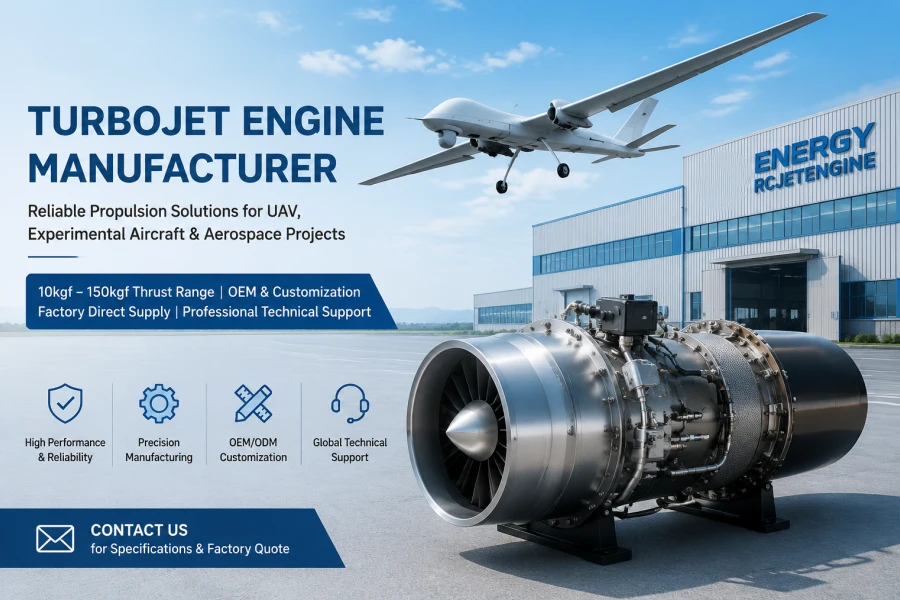
Small Turbojet Engine Manufacturer Guide 2026: Selecting the Right Propulsion Partner for UAV and Aerospace Projects
The global demand for motores turborreactores pequeños is growing rapidly as unmanned aerial vehicles (UAVs), experimental aircraft, and advanced aerospace platforms continue to evolve.
For aircraft developers, choosing the right engine supplier is one of the most important decisions during project development.
A turbojet engine is not simply a power unit. It directly affects:
- Aircraft performance
- Payload capability
- Flight speed
- Operational reliability
- Long-term project success
Many companies searching for a small turbojet engine manufacturer are not only looking for a product supplier. They need a reliable propulsion partner capable of providing:
- Stable engine performance
- Engineering support
- OEM customization
- Production capability
- Long-term cooperation
This guide explains the key factors to consider when selecting a professional UAV jet engine supplier.
1. Understanding Small Turbojet Engines for Modern UAV Applications
A small turbojet engine is a compact gas turbine propulsion system that generates thrust through continuous air compression, combustion, and turbine expansion.
Compared with traditional electric propulsion systems, turbine engines offer advantages including:
- Higher energy density
- Greater power-to-weight ratio
- Higher flight speed capability
- Longer operational range
- Suitability for high-performance aircraft platforms
Small turbojet engines are widely used in:
- Fixed-wing UAVs
- Target drones
- Experimental aircraft
- Research platforms
- RC turbine jets
- Aerospace testing systems
Depending on aircraft size and mission requirements, turbojet engines are available in different thrust classes.
| Rango de empuje | Aplicaciones típicas |
|---|---|
| 5–15kgf | Lightweight UAVs, RC jets, experimental aircraft |
| 40–60kgf | Professional UAV platforms and aerial systems |
| 80–120kgf | Heavy UAVs and advanced aircraft |
| 150kgf+ | Large experimental and specialized platforms |
Selecting the correct thrust category is the foundation of a successful propulsion system.
2. What Should You Look for in a Small Turbojet Engine Manufacturer?
Not every engine supplier provides the same level of engineering capability.
For commercial UAV and aerospace projects, customers should evaluate several important factors.
2.1 Complete Product Range and Engine Matching Capability
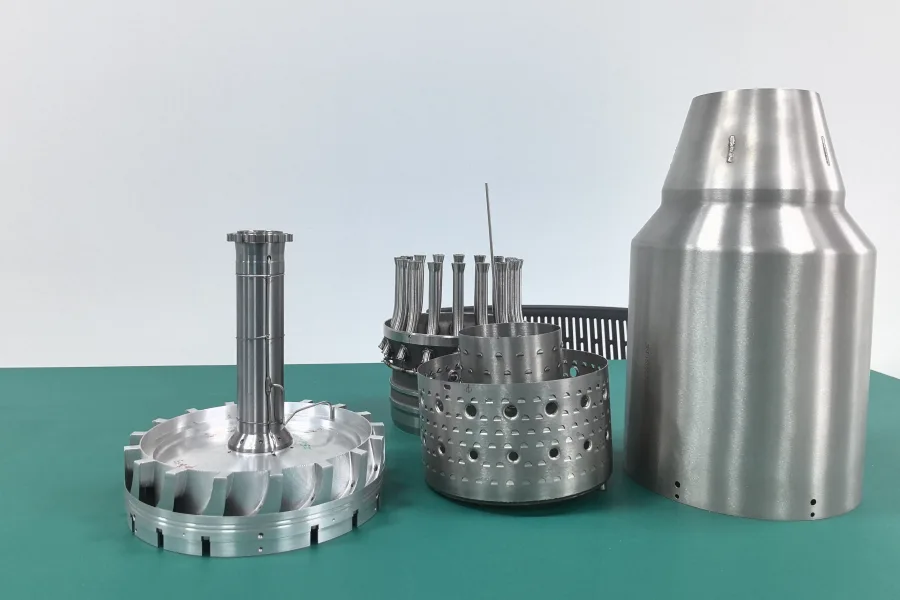
A professional turbojet engine manufacturer should provide multiple propulsion options instead of a single standard model.
Different aircraft designs require different engine characteristics:
- Thrust output
- Engine weight
- Dimensions
- Consumo de combustible
- RPM performance
- Installation requirements
For example:
A compact UAV may require a lightweight micro turbine engine, while a larger aircraft platform may require an 80kgf, 120kgf, or higher-thrust propulsion system.
A supplier with a complete product range can help customers select the most suitable engine based on aircraft requirements.
3. Performance Factors Beyond Thrust Rating
Many buyers compare turbojet engines only by maximum thrust.
However, professional aerospace users evaluate much more than the advertised thrust value.
3.1 Engine Reliability
Turbojet engines operate under extreme conditions:
- High rotational speed
- High temperature
- Continuous combustion environment
Reliable performance depends on:
- Precision manufacturing
- Component quality
- Rotor balancing
- Thermal management
- Testing procedures
A reliable engine should maintain stable operation during repeated flight cycles.
3.2 Throttle Response and Control Stability
For UAV applications, engine response directly affects flight performance.
Important factors include:
- Smooth startup
- Fast acceleration
- Stable RPM control
- Reliable ECU operation
A well-designed control system allows pilots and autonomous flight systems to manage engine power more effectively.
3.3 Weight-to-Thrust Ratio
Aircraft designers always consider weight efficiency.
A lightweight turbojet engine can provide:
- Increased payload capacity
- Improved aircraft balance
- Better overall performance
This is especially important for UAV platforms where every kilogram impacts mission capability.
4. Manufacturing Quality: The Difference Between a Supplier and a Propulsion Partner
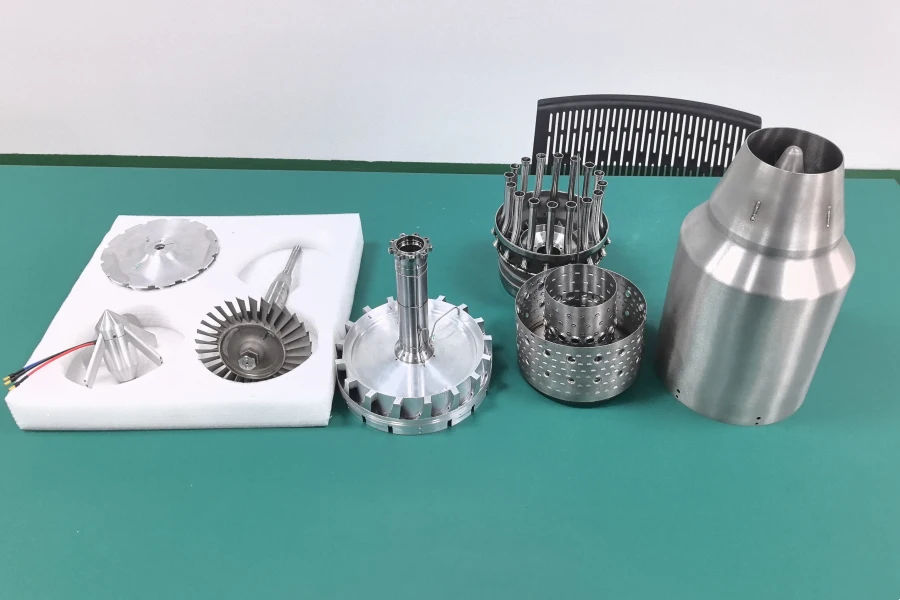
Small turbine engines contain precision components that must operate at extremely high speeds.
A professional manufacturer should have strong capabilities in:
Precision Machining
Critical components include:
- Compressor assemblies
- Turbine wheels
- Combustion chambers
- Engine housings
Manufacturing accuracy directly affects:
- Engine efficiency
- Vibration levels
- Service life
Dynamic Balancing and Testing
Turbojet rotors operate at very high RPM.
Proper balancing helps reduce:
- Mechanical vibration
- Component wear
- Performance instability
Before delivery, professional manufacturers should perform testing including:
- Startup tests
- RPM verification
- Temperature monitoring
- Thrust measurement
- Operational reliability testing
5. OEM Turbojet Engine Solutions for Custom UAV Projects
Many UAV and aerospace projects have unique requirements.
A standard engine may not always perfectly match the aircraft design.
Professional manufacturers can provide OEM solutions including:
Mechanical Customization
Examples:
- Engine mounting adaptation
- Installation structure adjustment
- Aircraft integration support
Performance Optimization
Including:
- ECU configuration
- Fuel system adjustment
- Operating parameter optimization
Project-Based Cooperation
For specialized applications:
- Prototype development
- Engineering testing
- Small-batch manufacturing
- Customized propulsion solutions
This capability is especially valuable for:
- UAV manufacturers
- Aerospace startups
- Research organizations
- Industrial drone companies
6. How to Select the Right Turbojet Engine for Your Aircraft
Choosing the correct engine depends on:
- Aircraft weight
- Payload requirement
- Flight speed
- Mission duration
- Installation space
Lightweight UAV and Experimental Aircraft
Recommended:
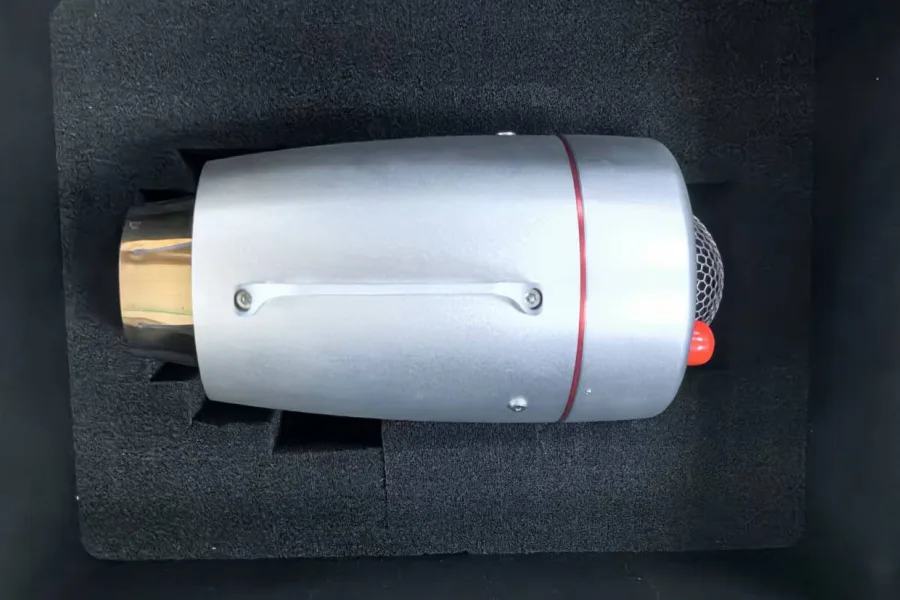
Micro Turbojet Engine (5–15kgf class)
Advantages:
- Compact design
- Lightweight structure
- High-speed capability
Suitable for:
- Small UAV projects
- RC turbine aircraft
- Flight testing platforms
Professional UAV Platforms
Recommended:
40–80kgf Turbojet Engines
Advantages:
- Higher thrust output
- Stronger payload capability
- Better performance for larger aircraft
Suitable for:
- Industrial UAVs
- Research aircraft
- Advanced aerial systems
Heavy UAV and Aerospace Applications
Recommended:
100–150kgf Turbojet Engines
Suitable for:
- Large UAV platforms
- Experimental aircraft
- High-performance applications
Key requirements:
- Reliable operation
- Strong engineering support
- Long-term supply capability
7. Why Choose Energy RCJetEngine as Your Turbojet Engine Supplier?
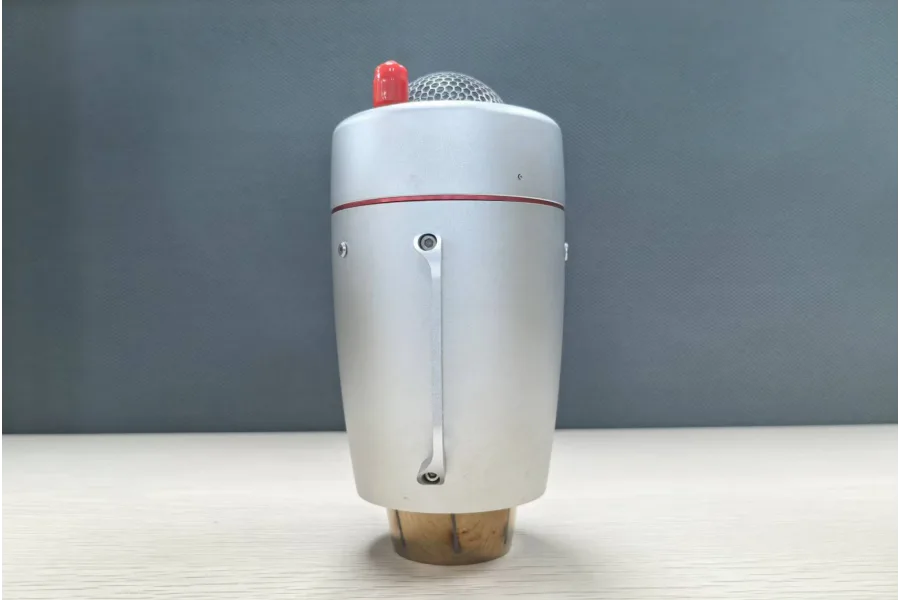
Energy RCJetEngine provides professional turbine propulsion solutions for global customers developing UAVs, experimental aircraft, and advanced aerial platforms.
Our advantages include:
Factory-Direct Engine Supply
Customers benefit from:
- Direct communication with the manufacturer
- Stable production capability
- Competitive project pricing
Professional Technical Support
We assist customers with:
- Engine selection
- Application evaluation
- Technical consultation
- Propulsion system matching
OEM and Customized Solutions
Support includes:
- Customized engine configurations
- Project cooperation
- Engineering requirements analysis
Our goal is to help customers develop reliable propulsion solutions for different aircraft applications.
8. Questions to Ask Before Purchasing a Small Turbojet Engine
Before selecting a supplier, professional buyers should consider:
Does the supplier manufacture engines directly?
Direct manufacturing capability ensures:
- Better quality control
- Faster communication
- Stronger customization ability
Can the supplier support your application?
A good supplier should understand:
- Aircraft requirements
- Installation conditions
- Performance targets
Does the supplier provide technical support?
Successful integration requires more than purchasing an engine.
Engineering assistance can reduce development risks and improve project efficiency.
Conclusion: Choosing the Right Small Turbojet Engine Manufacturer
The future of UAV and aerospace development requires reliable, efficient, and customizable propulsion systems.
When selecting a small turbojet engine manufacturer, companies should consider:
✓ Engine performance and reliability
✓ Manufacturing capability
✓ Product range
✓ OEM customization support
✓ Technical service capability
A professional turbojet engine supplier should become a long-term engineering partner, helping customers transform aircraft concepts into successful operational platforms.
Need a Turbojet Engine Solution for Your UAV Project?
Energy RCJetEngine provides:
- Micro turbine engines
- 40–150kgf turbojet propulsion systems
- OEM customization
- Factory-direct supply
Contact us today to discuss your propulsion requirements and receive engine specifications and technical consultation.
Get Engine Specifications & Factory Quote →